
Weeks 1–2
Pain
Take the heat out of it.
Hands-on work and smart load changes calm the injured tissue while you keep training everything that is not hurt.
What We Treat
The tweak you played through until it stopped letting you. The full-speed cut you have not tried since. It’s fixable, and it starts with a cause-first evaluation, not a guess.
Sound Familiar?
Two or more? Keep reading.
Why It Happens
Most sports injuries are a load problem wearing a diagnosis. A tendon, a muscle or a ligament got asked for more than it was built for that week, and it complained. Tendonitis, tennis elbow and runner’s knee are the same story told in three different places. Underneath it there is almost always a stiff joint or a weak link somewhere up or down the chain, plus mechanics that fall apart once you are tired. Traumatic injuries and post-surgical cases stack swelling and guarding on top of all that.
A quick look at the sore spot tells you where it hurts, not why it got overloaded. Rest and ice buy quiet, not capacity, which is exactly why it flares again on the third practice back. Our founder, Dr. Chris Erickson, was a head athletic trainer before PT school, so this clinic thinks in seasons and in tests you pass, not in handouts. You are the one who does the extra rep, which is exactly why you have been managing this instead of fixing it, and exactly why you are reading this.
The Honest Truth
Nobody regrets starting too early. Every week, someone here says they regret waiting.
How We Fix It
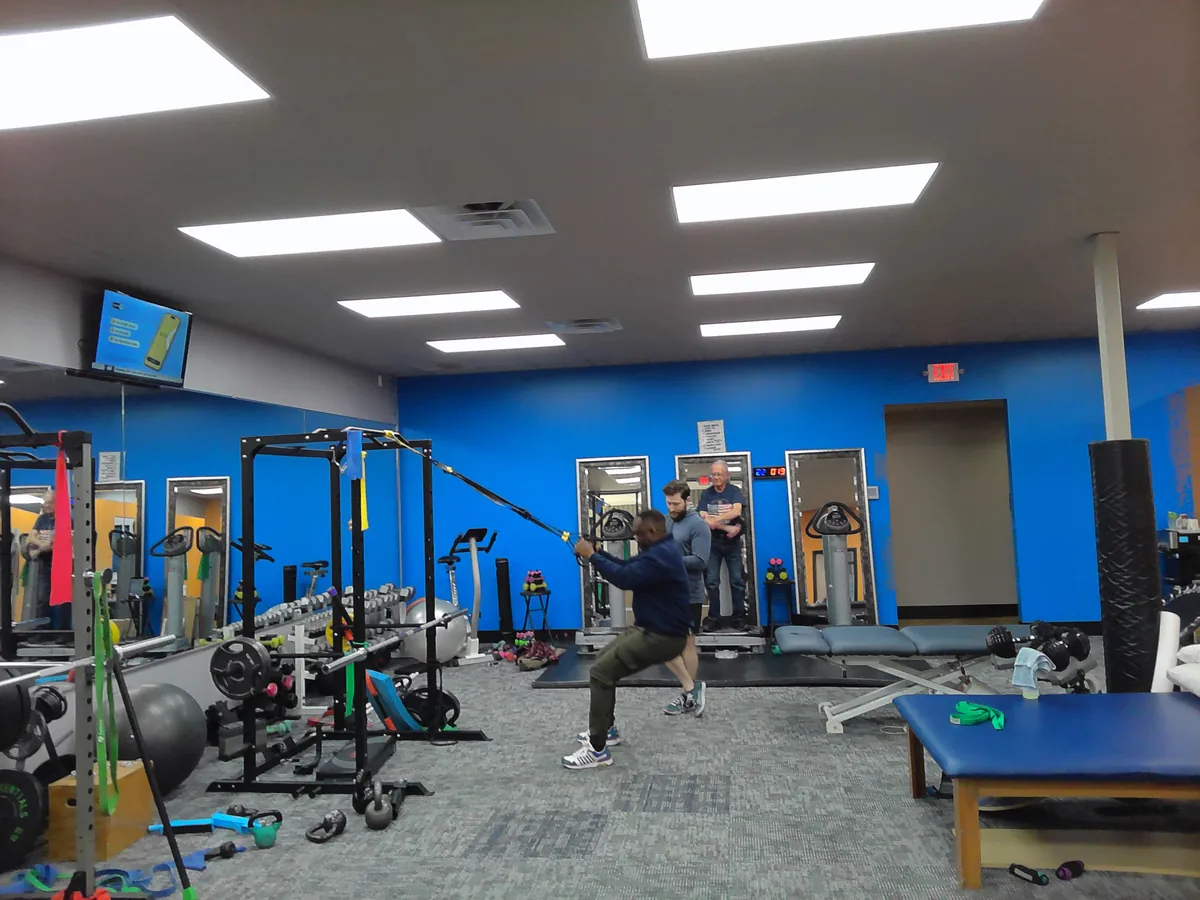
Every plan has an endpoint. Here’s what the four phases look like for a sports injury.
Weeks 1–2
Pain
Hands-on work and smart load changes calm the injured tissue while you keep training everything that is not hurt.
Weeks 2–4
Prime
Targeted mobility restores what the injury took, and the movement pattern gets rebuilt instead of worked around.
Weeks 4–6
Perform
Progressive strength and conditioning takes the tissue beyond game demand, because equal to game demand is where reinjury lives.
Weeks 6+
Prevent
Cutting, landing, throwing or sprinting mechanics get measured under fatigue and side to side, so you go back on a test result and not a calendar guess.
EHS is amazing, how they all work together to help patients come first and get back to where they should be after surgery. Chris thank you for taking everything on FB and making sure I was scheduled on the Monday after surgery
Shared by Heidi P. · EHS patient
Questions, Answered
In most cases no, and waiting burns weeks you cannot get back. No referral needed. Nebraska gives you direct, unrestricted access to a physical therapist. A licensed physical therapist or chiropractor can tell you what is actually driving it, what is safe to keep training in the meantime, and whether this even needs imaging. If it does, we will help you get there instead of leaving you to figure it out.
Training it the wrong way will. Training it the right way is the only thing that makes tissue stronger. The rule here is simple: take load off the injured part, keep load on everything else, so you do not lose your engine while the sore spot heals. You work one-on-one with a licensed physical therapist or chiropractor, every visit, so somebody is actually watching the reps and calling it when the form goes.
On average, our patients see a significant drop in pain in six visits or less. A full plan runs through all four phases, Pain, Prime, Perform and Prevent, typically 2 to 3 times a week for 4 to 6 weeks, depending on your sport and how long you have been managing it. It is a plan with an endpoint, and the endpoint is a test you pass, not an appointment you keep.
Book Your Visit
Request a time and a real person calls you back with the soonest opening. No phone tree. No ‘someone will reach out.’ Just a plan.
5.0 · 312+ five-star reviews
A real person calls you back, not an auto-reply
Step 1 of 5
That’s the hard part done. We’ll call during business hours to lock in your time.
Visit Us
One clinic, in Midtown Omaha at 1016 S 74th Plaza. We treat patients from Midtown, Dundee, West Omaha and Millard.