
Weeks 1–2
Pain
Get the night back first.
Hands-on work and smarter loading settle the irritated tendon and bursa so sleeping on that side stops being a gamble, starting on your first visit.
What We Treat
Sleep on that side again. Put the jar on the top shelf without a run-up. Right now it’s the catch at shoulder height and the 3am roll that wakes you up angry, and it’s fixable: it starts with a cause-first evaluation, not a stronger painkiller.
Sound Familiar?
Two or more of those? Keep reading.
Why It Happens
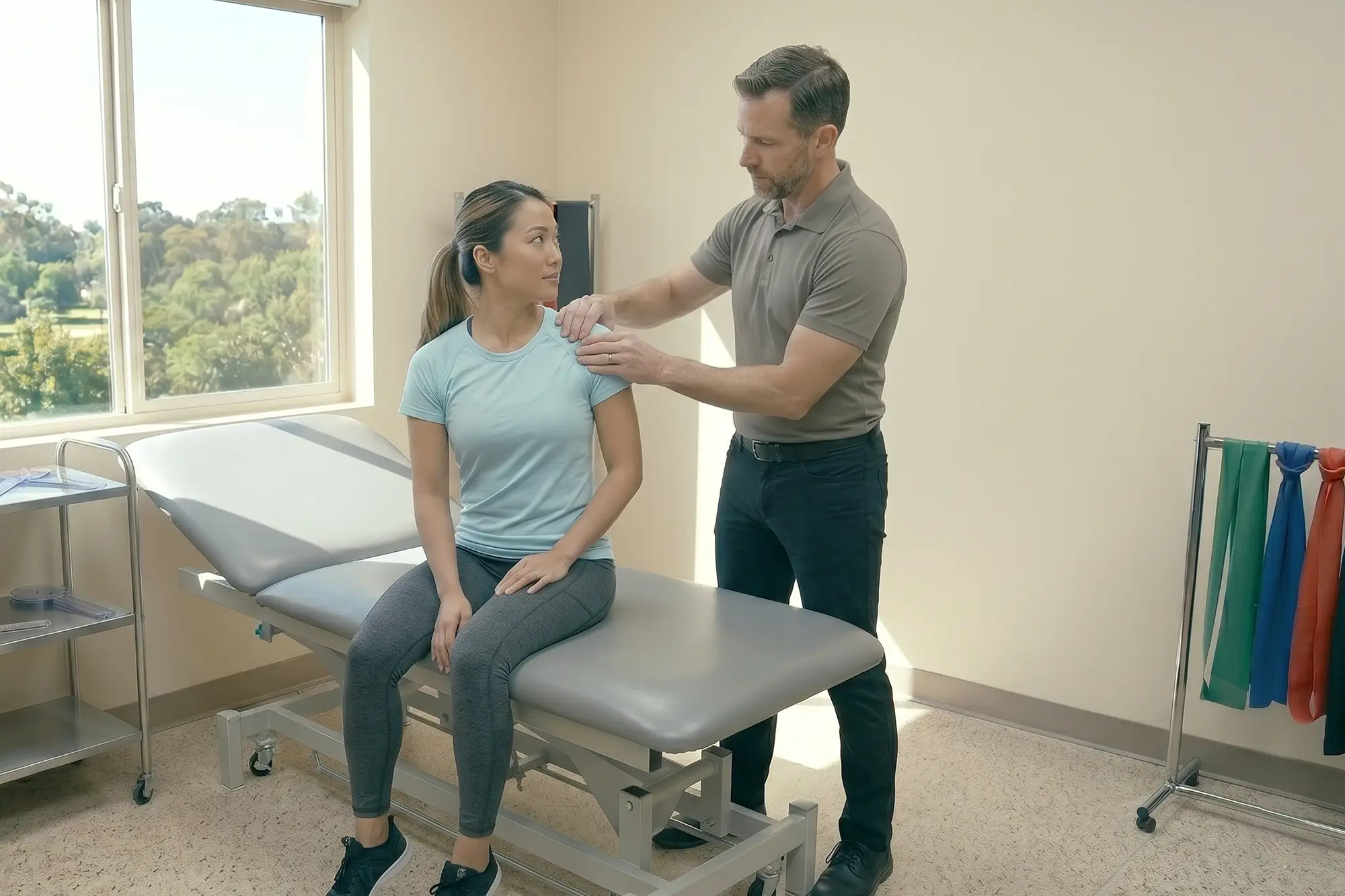
Your shoulder is a ball sitting in a shallow socket. That is what buys you all that reach, and it’s also what makes the joint easy to irritate. Pain there is almost never one thing. Usually it’s a mix: rotator cuff tendons that got inflamed enough to pinch every time your arm goes up. A bursa rubbing where it used to glide. A capsule that tightened during the weeks you stopped using the arm. And a shoulder blade that quit moving on your ribs, so the ball runs out of room before you’re anywhere near overhead.
None of that separates itself out in a two-minute glance, and a worn tendon on a scan doesn’t tell you which motion is causing your pain. A cause-first evaluation tests the arm and the shoulder blade together and finds the one letting the other down. That’s why rest, ice, or a generic band routine keeps falling short: they answer the symptom and never ask the question. You’re the one who plays through things, because that’s what everyone around you counts on, and it’s exactly why this shoulder has had a year to get worse. Find the cause and the fix stops being a guess.
The Honest Truth
Nobody regrets starting too early. Every week, someone here says they regret waiting.
How We Fix It
Every plan has an endpoint. Here’s what the four phases look like for a shoulder.
Weeks 1–2
Pain
Hands-on work and smarter loading settle the irritated tendon and bursa so sleeping on that side stops being a gamble, starting on your first visit.
Weeks 2–4
Prime
Targeted mobility work opens the joint and gets your shoulder blade gliding on your ribs again, which is what makes room overhead.
Weeks 4–6
Perform
Progressive rotator cuff and shoulder blade strengthening rebuilds the control that keeps the joint centered when you press, pull and carry.
Weeks 6+
Prevent
Overhead work, throwing or lifting gets tested at the load you actually live at, and when it holds, you’re done: that’s the endpoint, not another appointment.
They were able to find a specific program for me that helped get rid of my pain. They actually listen to your problems and find exactly what you need to feel better.
Shared by Fartun C. · EHS patient
Questions, Answered
Usually not first. Plenty of pain-free shoulders show cuff wear and arthritic change on a scan, so an image doesn’t always name what is actually hurting you. We start with a cause-first evaluation: how far the arm goes, what it does at the painful angle, and how your shoulder blade behaves while that happens. If imaging turns out to be genuinely necessary, we’ll help you get it, but you don’t have to wait on a scan to start feeling better.
Not when it’s dosed properly. A shoulder that stops moving gets stiffer and weaker, and stiff is how a sore shoulder turns into a frozen one. The work starts below the painful range and climbs as the tendon settles, and the load is set by what your arm can do today, not by a printout. You are one-on-one with a licensed physical therapist or chiropractor, every visit, so it gets adjusted the moment your shoulder tells us something.
On average, our patients see a significant drop in pain in six visits or less. A full shoulder plan is typically 2 to 3 times a week for 4 to 6 weeks, moving through Pain, Prime, Perform and Prevent, and a shoulder that has been stiff for months sits at the longer end. You get a plan with an endpoint: you’ll always know which phase you’re in and what’s left, not an open-ended string of appointments.
Book Your Visit
Request a time and a real person calls you back with the soonest opening. No phone tree. No ‘someone will reach out.’ Just a plan.
5.0 · 312+ five-star reviews
A real person calls you back, not an auto-reply
Step 1 of 5
That’s the hard part done. We’ll call during business hours to lock in your time.
Visit Us
One clinic, in Midtown Omaha at 1016 S 74th Plaza. We treat patients from Midtown, Dundee, West Omaha and Millard.