
Weeks 1–2
Pain
Loosen what stiffness took.
Hands-on work and mobility for the neck, trunk and hips ease the rigidity and soreness that make the first movement of the day the hardest one.
What We Treat
The first step of the day takes the longest. Turning around in your own kitchen has started to need a plan. Physical therapy won’t change the diagnosis, and it can change how well you move through your week, starting with a cause-first evaluation of how you actually walk, balance and get up.
Sound Familiar?
Two or more? Keep reading. Movement is the part we get to work on.
Why It Happens
Parkinson’s changes the signal, not your effort. Movements come out smaller, slower and less automatic than the ones you intended, which is why your steps shorten, your arm stops swinging and turning takes more thought than it used to. Then a second layer builds on top of that: hips and ankles stiffen, legs get weaker, posture drifts forward, and moving less makes each of those worse. That second layer is the one physical therapy works on, and there is usually more of it than people expect.
A short check in a clinic hallway will not tell you how much of your walking is the disease and how much is stiffness, weakness and habit that respond to training. It takes a real, cause-first evaluation of your walking, balance, strength and the tasks that have gotten hard. We are not going to tell you we can change the diagnosis. What we can do is help you use more of the movement you still have, and keep using it. You have handled bigger news than most people ever get, and you handled it by getting organized. This is one more thing you get to be organized about.
The Honest Truth
Nobody regrets starting too early. Every week, someone here says they regret waiting.
How We Fix It
Every plan has an endpoint. Here’s what the four phases look like when the goal is function you can hold onto.
Weeks 1–2
Pain
Hands-on work and mobility for the neck, trunk and hips ease the rigidity and soreness that make the first movement of the day the hardest one.
Weeks 2–4
Prime
Your therapist retrains long steps, full arm swing and real turns, the size of movement Parkinson’s quietly shaves off without telling you.
Weeks 4–6
Perform
Strength, balance and stepping drills get practiced where it counts: standing up, getting through a doorway, turning in a tight kitchen, carrying something with both hands.
Weeks 6+
Prevent
We set the weekly program, the home changes and the check-in points that protect your gains and lower your risk of a fall, so you know what to keep doing and when to come back.
…They actually listen to your problems and find exactly what you need to feel better.
Shared by Fartun C. · EHS patient
Questions, Answered
Neither, and you do not need a scan or a specialist appointment to begin. If you were diagnosed recently, this is the best time to get your walking, balance and strength measured while you are moving well, so you and your therapist know exactly what to protect. If it has been years, there is still strength, mobility and balance to work with, and we start from where you are today. No referral needed. Nebraska gives you direct, unrestricted access to a physical therapist, and we work alongside whatever your physician has you on.
Fatigue is real and we plan the session around it instead of pretending it is not there. You work one-on-one with a licensed physical therapist, every visit, so the hard work gets scheduled for the part of your day when you move best, rest is built in, and nothing is dosed past what you can repeat at home. Balance work happens next to a rail with your therapist an arm’s length away. If a day is a bad day, we change the session, not your plan.
A block of care here is typically 2 to 3 times a week for 4 to 6 weeks, moving through all four phases: Pain, Prime, Perform and Prevent. It ends with a home program you can actually keep up and a clear picture of what changed. That is the endpoint, not an open tab of appointments. Plenty of people come back for another short block later when a new goal shows up, and that is a decision you make with your therapist, not a subscription.
Book Your Visit
Request a time and a real person calls you back with the soonest opening. No phone tree. No ‘someone will reach out.’ Just a plan.
5.0 · 312+ five-star reviews
A real person calls you back, not an auto-reply
Step 1 of 5
That’s the hard part done. We’ll call during business hours to lock in your time.
Visit Us
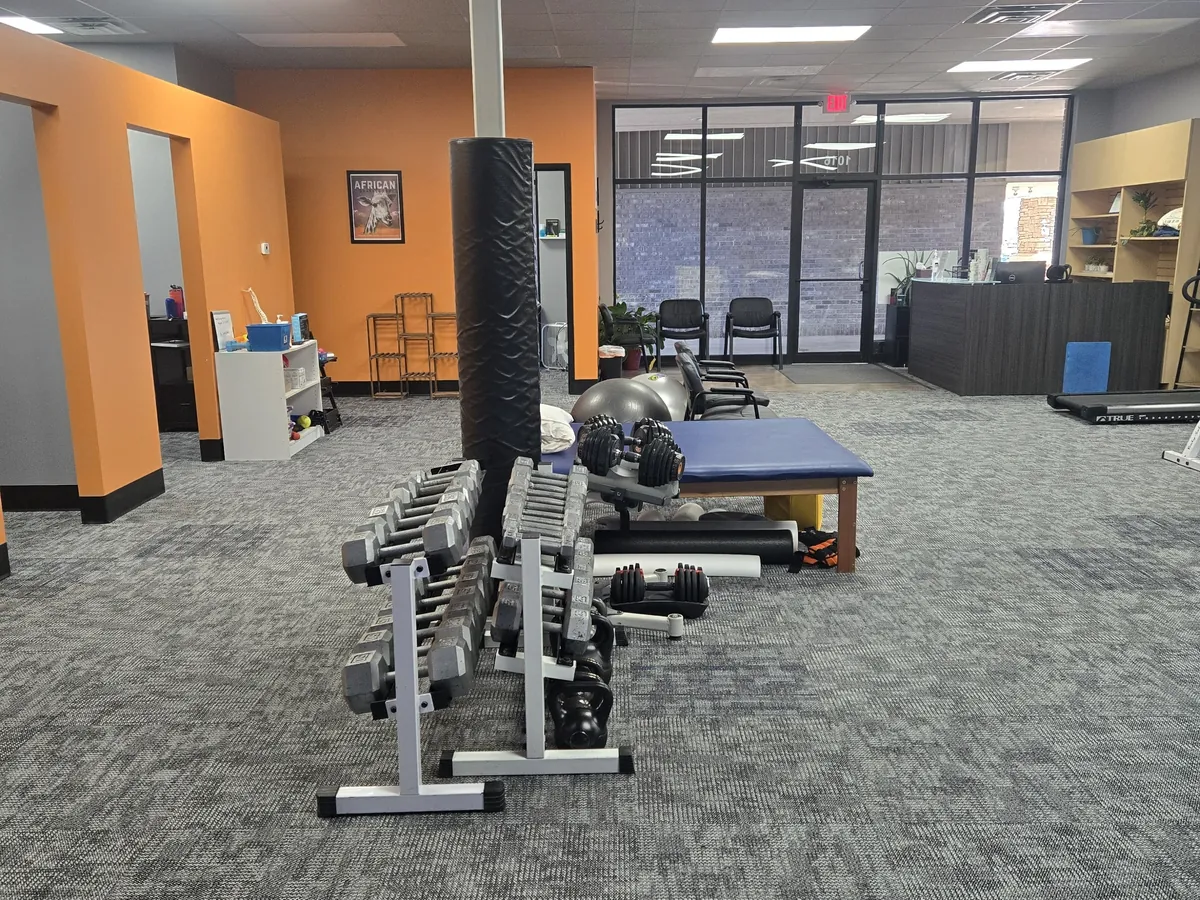
One clinic, in Midtown Omaha at 1016 S 74th Plaza. We treat patients from Midtown, Dundee, West Omaha and Millard.